
digital wellness in the world of beauty
Wellness is not just a trend in beauty; it’s a lifestyle that touches each area of our lives.
Yet a career in beauty can be digitally heavy!
The beauty industry's always-on, digitally driven pace leaves little room to explore the wellness practices it needs most.
How do we continue to thrive instead of survive digitally in a world that suddenly made us overcharged techies? The answer, Digital Wellness.
Digital wellness is a way of living that supports our overall health and well-being while using technology. It’s about intentionally balancing body, mind and spirit so life can be lived more fully with yourself, your community, your environment, and your digital world.
We’re A Busy World
Top Internet Activities Per Minute (Approximate)
Google Searches: 5.9 million searches.
TikTok: 16,000+ videos uploaded.
WhatsApp: Roughly 42 million messages shared.
YouTube: 3.5 million videos viewed.
Emails: 251.1 million emails sent.
Streaming: 362,962 hours of Netflix watched.
Social Media: 138.9 million Reels played on Meta platforms.
Online Shopping: $43.6 million spent.
2026 Internet Usage Projections
Internet Users: As of early 2026, 6.04 billion people are online, comprising 73.2% of the global population.
Video Consumption: It is estimated that 1 million videos will be watched every second in 2026.
Data Usage: Approximately 9–10 petabytes of data are consumed every minute worldwide.
Video What Happens in an Internet Minute
The Impact of Digital Engagement on Health
In this increasingly digitized world, understanding and prioritizing digital wellness has never been more important, as it directly impacts our mental, emotional, and even physical health.
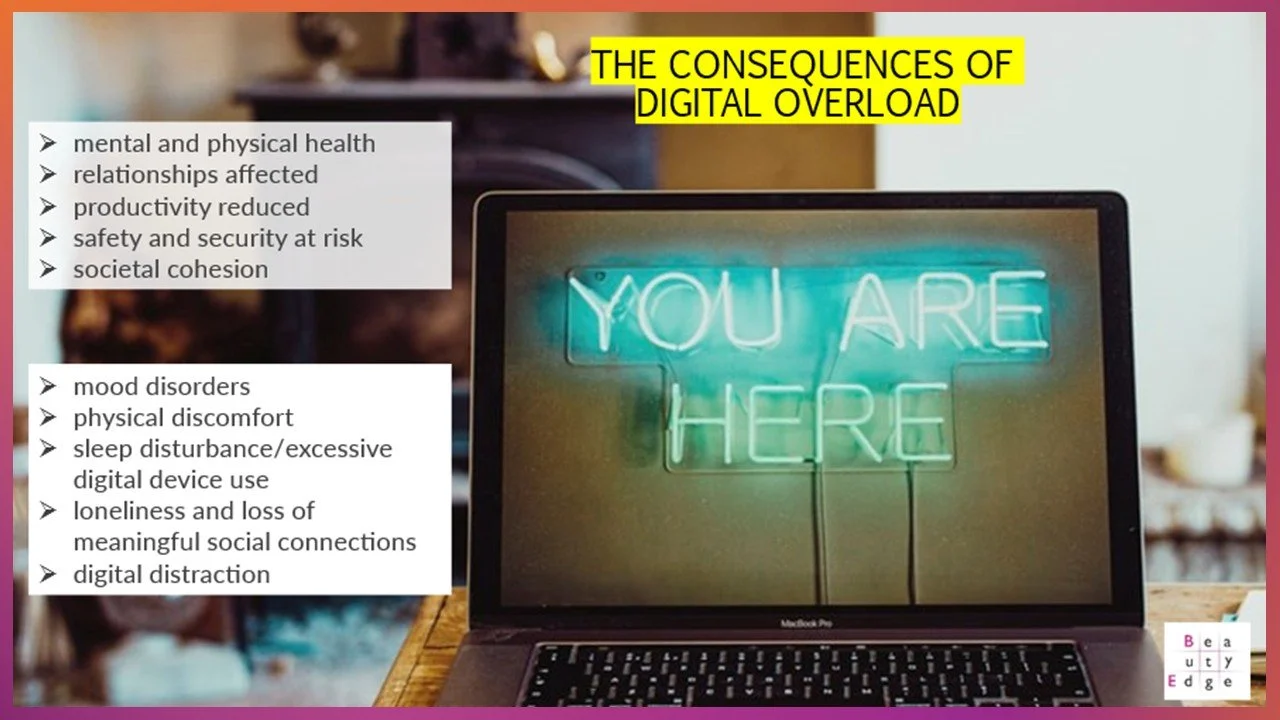
Digital overwhelm, burnout, and distractions remain three of the biggest factors impacting well-being. Over 80% of employees are at risk of experiencing burnout, while workplace stress costs the U.S. economy around $300 billion per year. Wellhub
Most notably, burnout now affects every industry, every job level, and every demographic and most employers are only beginning to design work with well-being in mind.
Four in five employees report that it would help them to receive information or training about stress or burnout management from their employer. NAMI
59% of U.S. employees reported burnout in 2024, making it what many experts now call the "new normal." High 5 Test
Overuse and dependence on digital devices are becoming the norm in our society. Worldwide, an estimated 210 million people suffer from internet and social media addiction, representing 4.69% of all social media users globally. The Interview Guys In the United States, the average adult now spends over 5 hours per day on their smartphone a 14% increase from just the year prior. DemandSage
Children and teens between the ages of 8 and 18 spend an average of 7.5 hours per day engaged with screens for entertainment purposes. Lanier Law Firm In fact, 41% of teenagers spend more than 8 hours on screens each day. Aprilaba
More than half of all drivers admit to checking social media behind the wheel CounterMan and 85% of teenagers report finding it difficult to reduce their screen time, often feeling drawn to apps and games and losing track of time spent online. Magnetaba
Half of Americans, 49%, feel they are addicted to their devices, yet over 1 in 4 of those who admit to the addiction do not feel it is a problem. DemandSage Technology users have also started to report a growing sense of dependence on their devices, signaling an urgent need for digital wellness awareness and education.
Screen time use takes up a large proportion of our waking time, and interactions with digital devices are increasingly replacing or interfering with meaningful forms of social interaction and activity.
Take a Moment to Evaluate your Digital Use
Where do you see your attention being distracted by digital engagement?
What are ways you see yourself hooked?
What devices/app/features are most distracting to you?
Reflecting on your screen-time, within which digital environments do you spend the most time?
As it relates to Beauty do you find yourself scrolling IG or TikTok too long looking for inspiration?
Are you spending more hours getting that video or image picture perfect?
How are online business meetings managed? Are you jumping on to each and every zoom meeting?
How are your team members engaging with each other, and are boundaries being set on social engagement?
Improving Digital Team Communication
To improve communication between teams, family and community members, guidelines can be put into place. Different-sized organizations require different ideals and policies.
Here are a few guidelines to consider and incorporate as we continue to thrive online:
Express housekeeping or guidelines before starting online meetings.
Offer permission to online guests to turn off their cameras if they feel uncomfortable on screen for the duration of the meeting. (Not everyone feels comfortable in front of a camera, nor being recorded.)
Request cell phones to be turned off or placed in another room during the meetings.
Offer built in break times during the online meetings. For example: Offer a 5-minute breathing exercise after every 30 minutes of meeting online.
Where Beauty Connects to Digital Wellness
The global wellness economy recognizes that how we care for our skin, hair, and body is a core part of how people invest in their overall wellbeing. What was once considered vanity is now recognized as self-care, with consumers reaching for products that do as much for their mind and mood as they do for their skin.
For chemists and formulators, neurocosmetics and dermo cosmetics open a fascinating and still largely unmapped frontier.
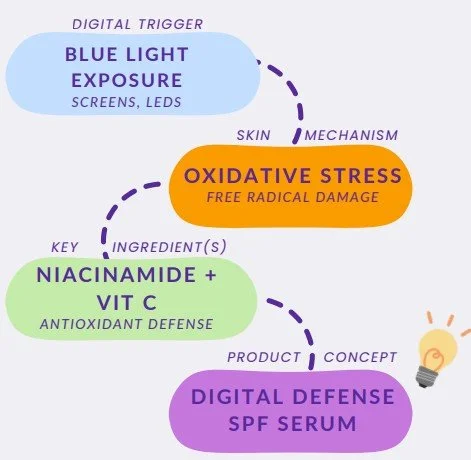
Beauty’s Response to Digital Wellbeing
This roadmap connects the digital-life stressors we live with every day to the skin science behind them and the concept starting points worth putting on your bench.
Image courtesy of FLSCC
And, at the end of the day, the best notification you can get is the one from your own skin telling you it's time to put the phone down and pick up a good serum.